Deck footings
Footings carry your deck's weight into the ground. The right choice depends on your soil, yard slope, and deck size and height.
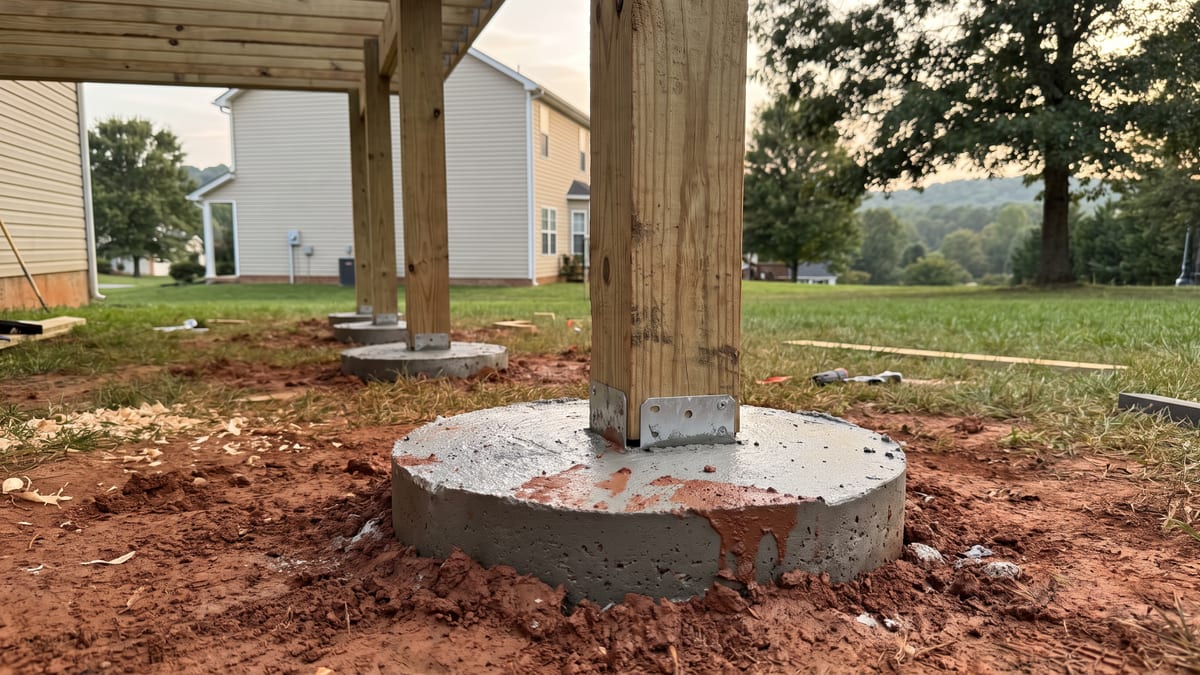
Concrete footings
$A poured concrete base for deck posts.
Best for Ground-level, raised and second-story decks.
Benefits
- Strong once cured
- Typically the most economical option
- Sized and placed for your deck's weight
Keep in mind
- Must reach below the frost line
- Digging, inspection and curing add time
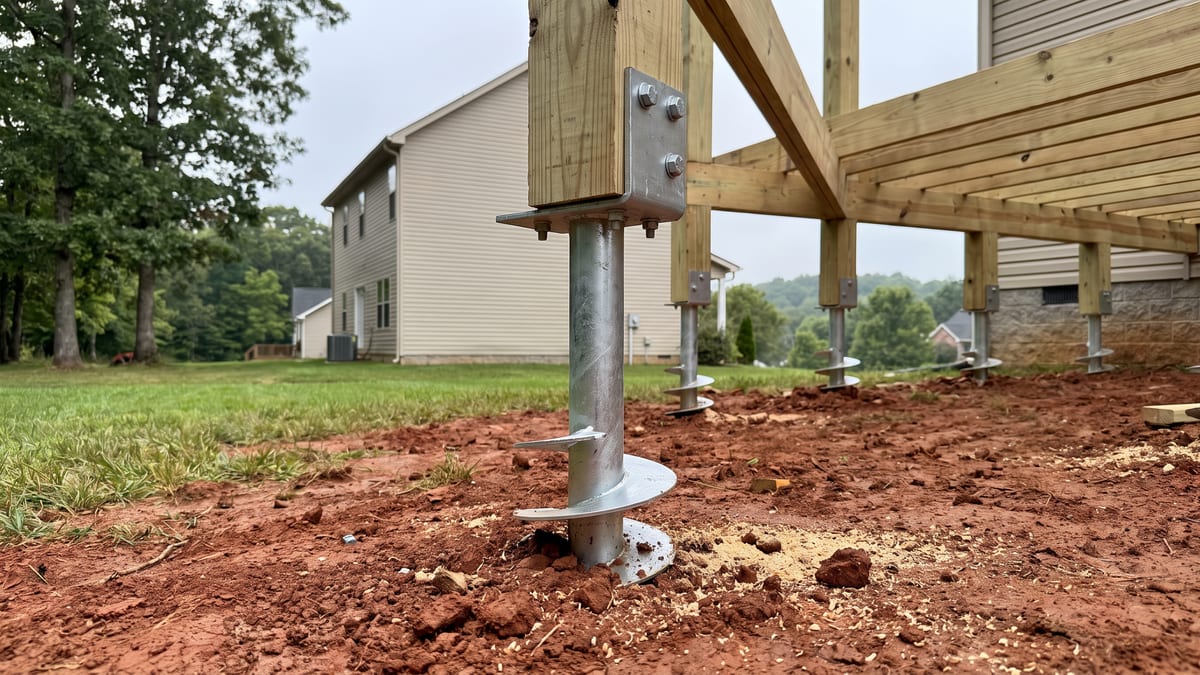
Helical piers
$$Steel shafts twisted into the ground below the frost line.
Best for Tall decks and projects where concrete curing time is a concern.
Benefits
- No concrete to cure before framing
- Can be installed year-round
- Little digging and no soil to haul away
- Load ratings can suit tall decks
Keep in mind
- Costs more upfront than concrete footings
- Requires specialty equipment
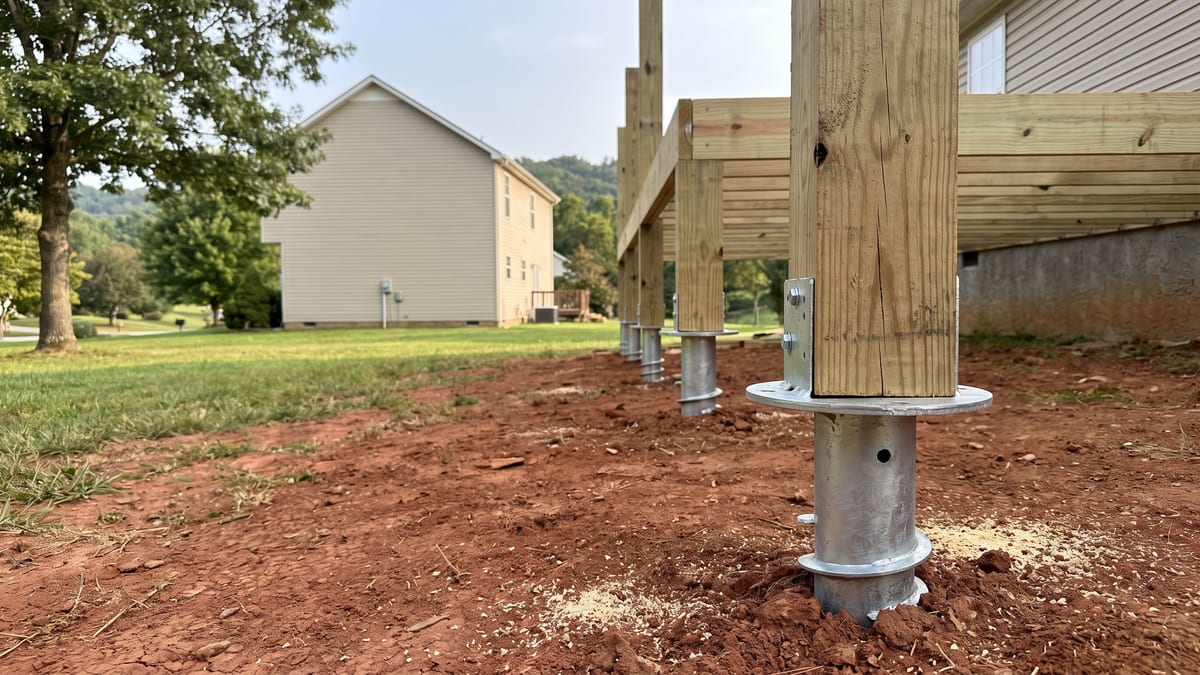
Ground screws
$$Steel screw footings installed without concrete or digging.
Best for Yards with tight access and projects in cold weather.
Benefits
- Each screw installs in minutes
- Rated for specific loads
- No concrete or excavated soil to haul away
- Can be removed and reused
- Can go into frozen ground
Keep in mind
- Requires specialty equipment
- Costs more per footing than concrete
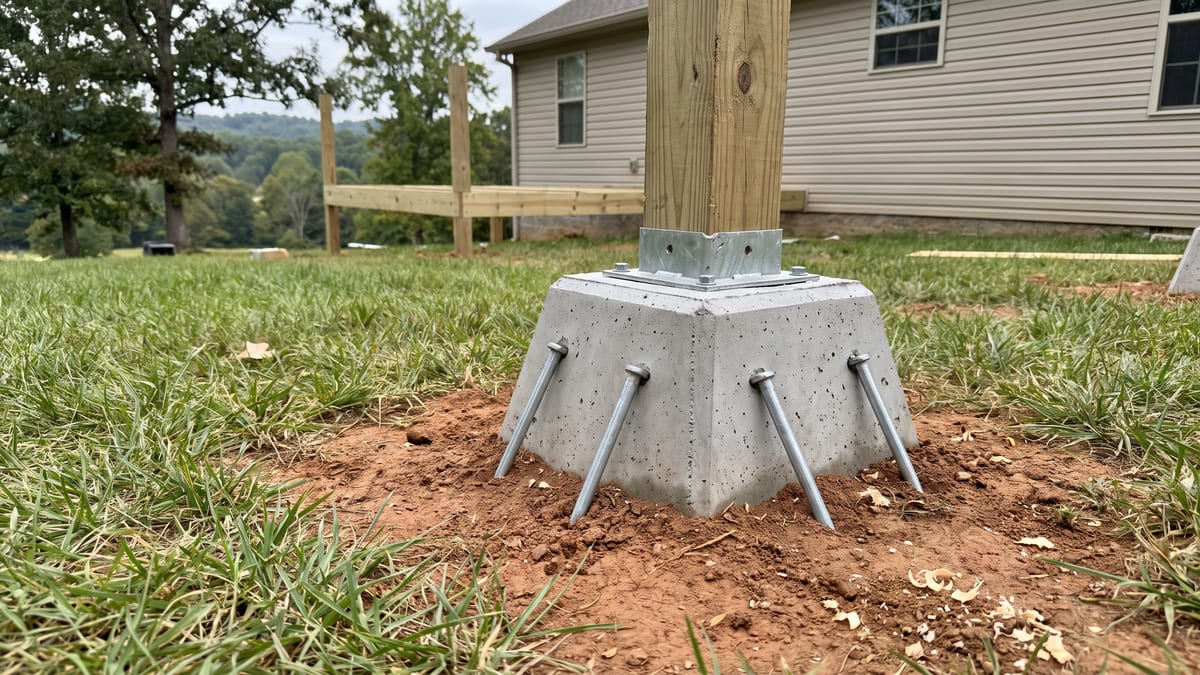
Diamond Pier footings
$$A precast concrete head secured by steel pins driven at angles.
Best for Tight backyards, established landscaping and ground that is hard to dig deeply.
Benefits
- Requires little digging
- Leaves more of your yard undisturbed
- Resists frost heave and can work on slopes
- Rated for specific loads
Keep in mind
- Costs more than poured concrete
- Not suited to solid bedrock or very heavy loads
Tell us aboutyour deck.
An old deck you want gone, a porch you want screened, or a blank patch of yard: send the details and we will get you a quote.